
 By William Smith
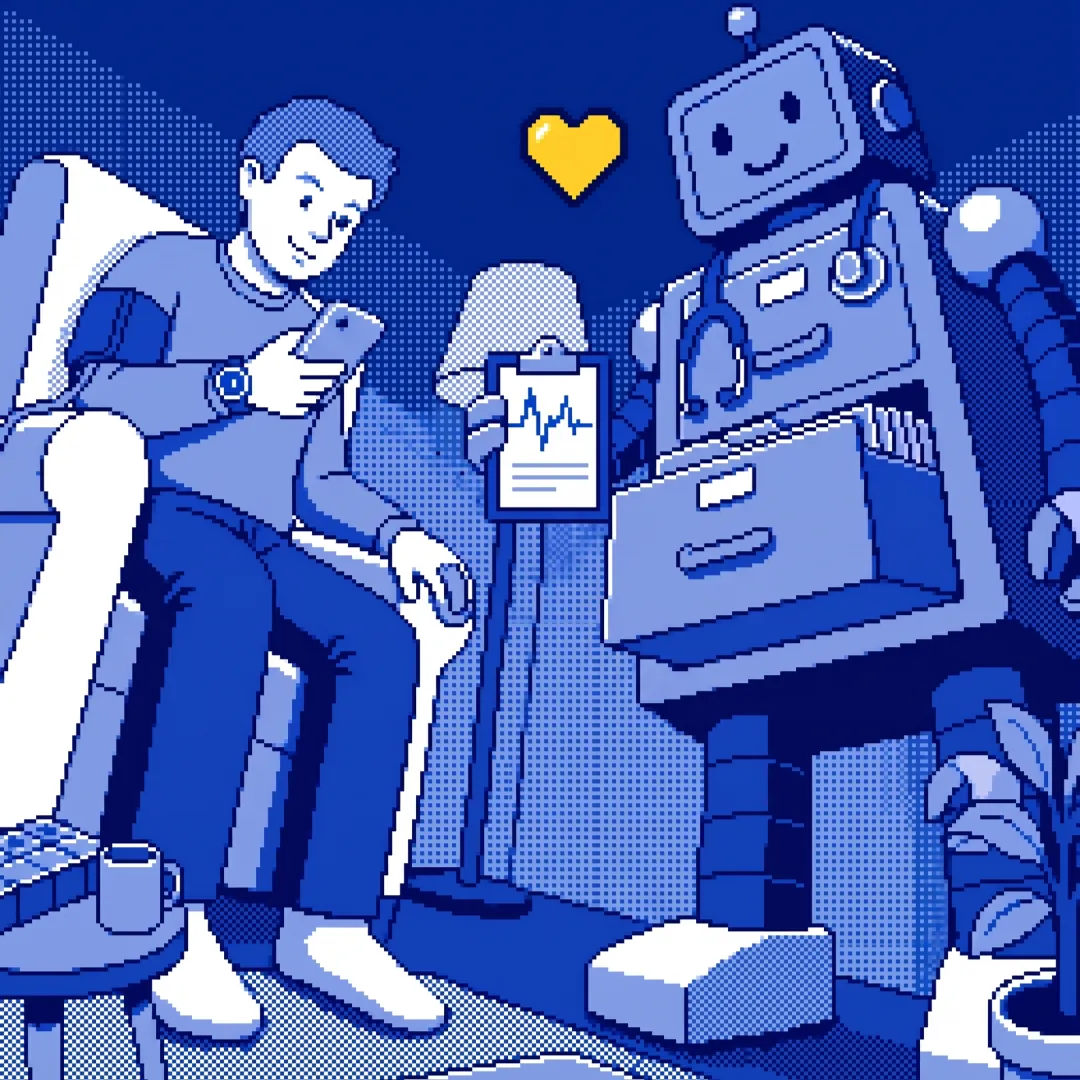
- Paul Swider built Tula, an open-source personal health agent, on top of his medical records and a decade of data from his own devices.
- ChatGPT spotted his shingles. Tula knew his medications and history, gave him the 72-hour window, and sent him to the right urgent care on a Sunday.
- Paul's rule of thumb: if you're not paying for an AI, assume it may train on what you type.
- He thinks doctors having their own agents, talking to patients' agents, is only a matter of time.
- The lesson for a small business: an AI gets useful when it knows your whole picture.
Paul Swider woke up on a Sunday with a rash spreading across his back, and before he called anyone, he took a photo and asked his AI what was going on.
He went to ChatGPT first, since it was two clicks away, and it told him the rash looked like shingles. Then he gave the same photos to Tula, the personal health agent he built for himself, which already knew his medications and history. Tula told him he had about 72 hours to get treated, reminded him his doctor's office was closed on Sundays, drafted a message for his patient portal, and pointed him to a well-reviewed urgent care nearby. He was in and out in under ten minutes, after telling the doctor, "I just need you to verify that this is shingles."
Paul is the CEO and Chief AI Officer of RealActivity, and he told that story on Thursday night at AI in NH's Manchester chapter, in a talk on AI in healthcare. It was my first time at one of their events, and the room was full.
A biohacker with ten years of data
Paul grew up in Burlington, Vermont, where the biggest company in town was IDX, one of the first healthcare software companies. He started out teaching their developers, and he figures about 80% of his career since has been in healthcare, mostly inside hospital systems.
About five years ago, he said, he became "a little bit of a biohacker." He has one of the first Garmin Wi-Fi scales, ten years of heart data from his Garmin Venu watch, a Withings blood pressure cuff, and a pulse oximeter at home, and he pointed out that everything but the scale costs under $100. A 23andMe test flagged higher odds of glaucoma, high blood pressure, and heart trouble. Most of his uncles died in their sixties, and he lost his mom young, to brain cancer, so when he turned 50 he pointed the thing he knew best, technology, at staying healthy as long as he can.
"I wasn't trying to make a product. I wasn't trying to prove AI," he said.
He started the way a lot of us do, pasting his records and DNA results into ChatGPT, and last spring he built Tula.
What Tula is
Tula is an AI assistant with one job: Paul's health. He talks to it from his phone through Telegram, while the agent itself runs on a server in his own Microsoft Azure account, built on the open-source agent tool OpenClaw and running on Claude Opus 5.5.
It pulls his records straight from the patient portals at Mass General and Beverly Hospital, using open-source code by Josh Mandel and the right to your own health data that patients have under the 21st Century Cures Act. Add the scale, the watch, the cuff, and the DNA results, and Tula has a fuller picture of his health than any single doctor's office.
Tula is open source, so anyone can read the code or build their own. It isn't a medical device, Paul still sees doctors, and he's quick to say, "I'm not your average patient," after 30 years building hospital software.
What the shingles story shows
ChatGPT was fast and got the main thing right, but Tula knew his medications, his doctor, and what day it was, and that context turned a good guess into a plan. The doctor still mattered, too. Nothing warned Paul that shingles can drag on for eight weeks, which a doctor might have mentioned with a few more minutes in the room. Paul thinks doctors' jobs will shift the way programmers' jobs have, toward being what he called "an orchestrator of health."
How he answered the room
The talk turned into a conversation early, which Paul seemed to want. Here's how he answered the questions that stuck with me.
Are these AI health tools HIPAA compliant? The consumer versions of ChatGPT, Claude, Copilot, and Gemini health tools aren't, he said, and HIPAA mostly protects the hospital anyway. His rule of thumb was simpler: "If you're not paying for it, they're probably gonna use your data to train." Paid and business plans generally don't, which is worth checking before you paste in a client's details.
What about all the health data breaches? To Paul, breaches are the reason to keep your own copy, because "every Epic deployment from Singapore to Boston is a ransomware target," and when a hospital system goes down, patients lose access to their own history.
Do you trust your AI more than your doctor? Right now, he said, yes, partly because he can barely reach his doctor. When a cyst showed up a couple of weeks after the shingles, he spent half an hour on an outdated phone number and then got offered a December appointment with a PA.
Do you see a world where doctors have their own agents, and Tula talks to them? I asked this one. "It's only a matter of time," he said. The AI scribes doctors already use, like Microsoft's Dragon Copilot, are starting to reach into billing and scheduling, and he expects them to grow into agents that eventually connect with patient agents. He also flagged the cost of running all those agents, and the risk of leaving behind people who can't afford them.
Where did the name Tula come from? I asked this one too. Tula was his mom, whom he describes on the project page as a Mensa member, a mother of five, and "one of the sharpest and most direct people I have ever known."
My take
The biggest thing I took home is how powerful it is to have your own agent, one that already knows your whole picture before you ask it anything. I have one too. Mine is called Sherman, and it started in ChatGPT before I kept building on it with my own custom development on Claude Opus 5.5, the same model Tula runs on. Paul built his for his health and I built mine for my work, but both skip the part where you explain who you are and get straight to being useful.
What I'm most curious about is agents working with other agents, on top of doing things for us. That's why I asked Paul about doctors' agents, and it was clear he finds it just as interesting. Picture Tula sharing your history with your doctor's agent before you walk in, so your ten minutes in the room go to the conversation that needs a person.
If you want an AI that knows your business the way Tula knows Paul, the free Business Brain is a good place to start. It gives any AI your voice, your customers, and how you work, and if you'd like help setting it up, reach out.
AI in NH holds a quarterly event in each of its five southern New Hampshire chapters, and next up is data centers, energy, and the environment. I'll be there.
More events I've written up: Boston Dynamics' Chad Wright on robots on Main Street.