
 By William Smith
If you’re trying to figure out where AI belongs in your business, The State of AI in New Hampshire gives us a useful place to start. The New Hampshire AI Task Force, convened under the NH Tech Alliance, published the report in October 2026.
In its Consumer & Small Business chapter, led by Liz Gray, practitioners describe useful experiments that often depend on one motivated person. There’s much less work that’s governed, measured, and repeatable. The findings come from practitioner conversations, so they give us experiences to learn from without telling us how common each one is across the state.
That leaves us with a practical question: how do you get from trying an AI tool to relying on it for a piece of your work?
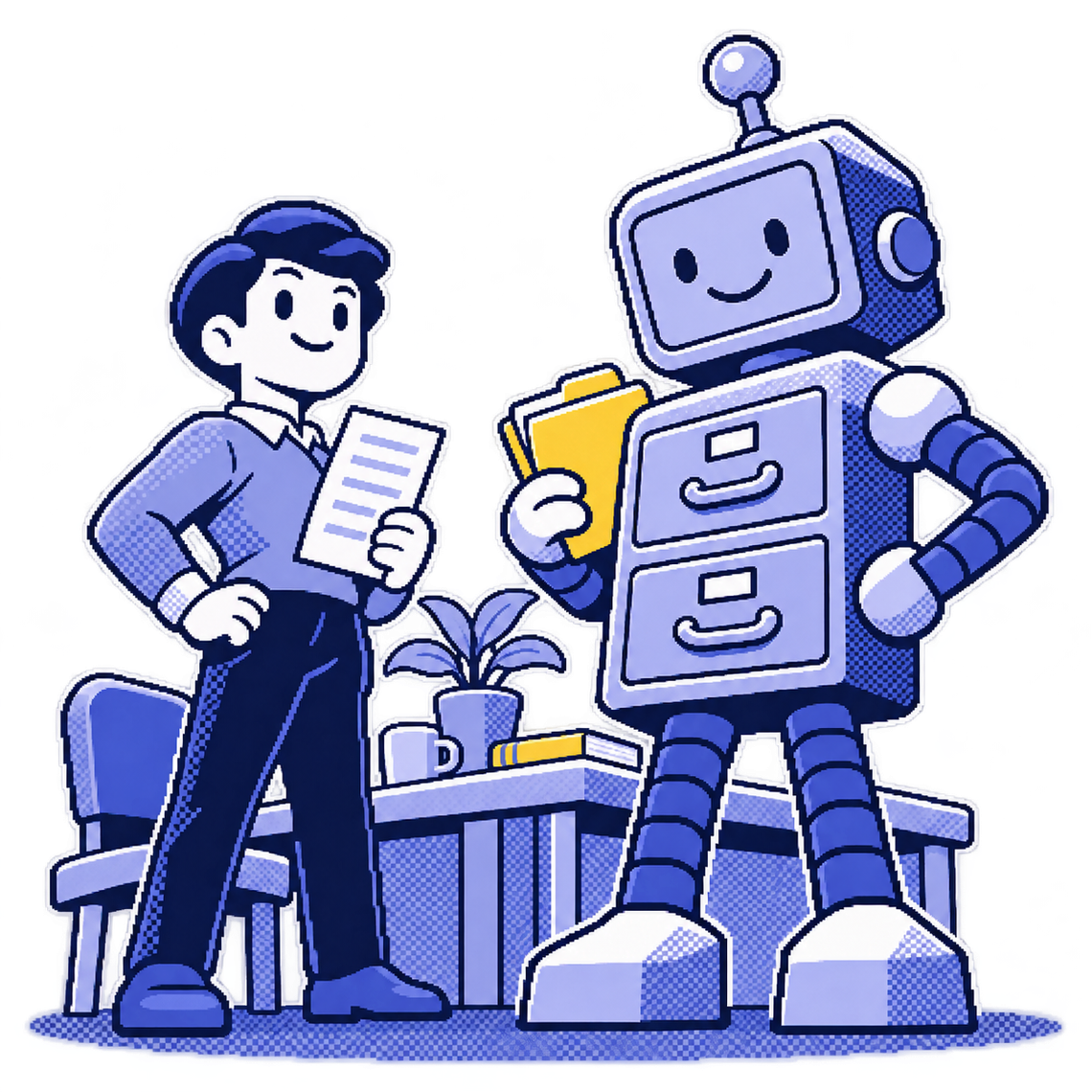
You hear a lot about keeping a human in the loop with AI. I tend to picture it the other way around. I’m doing the work, and I bring AI into the loop. I explain what I want, look at what comes back, and work through what needs to change, much as I would when training a junior employee.
So if we were looking at your business together, I’d start by asking about something you already do well. What’s a job you understand well enough to explain to someone else, and well enough to notice when they get it wrong?
Organizing my desktop was a useful start
For me, one of the first things I automated was organizing the files on my desktop and backing them up at night. Files went into folders, the work got backed up, and a small, repetitive job stopped relying on me remembering to do it.
It was a useful place to start because I knew what the result should look like. I didn’t have to learn an unfamiliar business process at the same time I was learning how to automate it.
You probably have work like that sitting on your own desk. You know where the files belong, which information goes into a report, or what you look for when you research a prospective customer. You’ve done it enough times that parts of it feel obvious.
When you try to explain that job to someone else, though, you start to notice how much you’ve left unsaid. Those obvious parts are often the instructions you forget to give. Working through them is part of teaching the job.
Break the job into pieces you can explain
I’ve worked with bookkeepers on automating pieces of their work: handling files, working through report and reconciliation subtasks, and double-checking the results. Calling the whole thing “bookkeeping” makes it sound like an enormous assignment. Once we start talking through the individual steps, it becomes easier to see where some help could be useful.
That conversation also helps you work out what kind of help you need. Sometimes AI helps build the tool. It writes code for a repeatable task, and that code can run later without a model involved at all. If a fixed set of instructions will do the job, you don’t need an AI making a fresh judgment every time.
This is where knowing the process matters. You can explain what normally happens and recognize when a result needs a closer look. As you work through the steps, you’re using that knowledge both to teach the task and to decide whether the automation is useful.
I bring AI into marketing strategy, creative work and design, and prospect research, too. I’ve also used it for daily searches about a company and its competitors. The work changes, but I go into it expecting to participate.
Teaching takes more than an assignment
Think about how you’d hand one of those tasks to a junior employee. What would you show them before they started? What would they need to know about your business? If the result missed something, you’d probably sit down with them, point it out, and explain why it mattered.
That’s the kind of attention I mean when I talk about working alongside AI. A vague assignment leaves a lot for it to guess. And when it gets something wrong, “try again” doesn’t give it much to work with. Explaining what it missed and what a good result would look like gives the next attempt a better starting point.
Then there’s the next time you do the job. How will those instructions be available? Depending on the tool, you might keep them in a saved project or a reference document, or include them with the next task. Correcting one conversation doesn’t necessarily carry that lesson into every future interaction.
There’s effort involved in all of this. You’re putting some of what you know into words, often for the first time. That’s why I’d choose a task that comes back regularly and produces something you can check. You can use what you learn on the next attempt.
Keep the boundaries in the conversation
The Consumer & Small Business chapter also brings up confidentiality and confidently wrong answers. Participants wanted practical training connected to their jobs and clear guidance on safe use.
Those concerns belong in the conversation before you hand over the work. What information are you allowed to put into the tool? How will you check what comes back? Teaching AI a task includes working through those questions, along with showing it where the files are or how the report should look.
You can make that easier on yourself by keeping the first attempt small enough to follow. As you repeat it, notice where you’re still stepping in. Sometimes that will show you an instruction you haven’t explained. Sometimes it will show you where the task still needs your judgment.
Start with one task you can check
So, thinking about your own work, what’s one recurring job you could try this with? I’d write down what a good result looks like, choose an example you’re allowed to use, and work through it with the tool. Then compare what comes back with what you expected and make the next instruction more specific.
After a few passes, you’ll have something concrete to talk about. You can see what you’ve explained, where it’s helping, and where you still need to be involved. That gives you a much better basis for deciding what to hand over next.
That’s how I think about bringing AI into a business. I’m still doing the work, with AI in the loop and a job I’m prepared to teach.
Source: New Hampshire AI Task Force, The State of AI in New Hampshire, October 6, 2026. Methodology: page 4. Consumer & Small Business, sector lead Liz Gray: pages 56–59.