
 By William Smith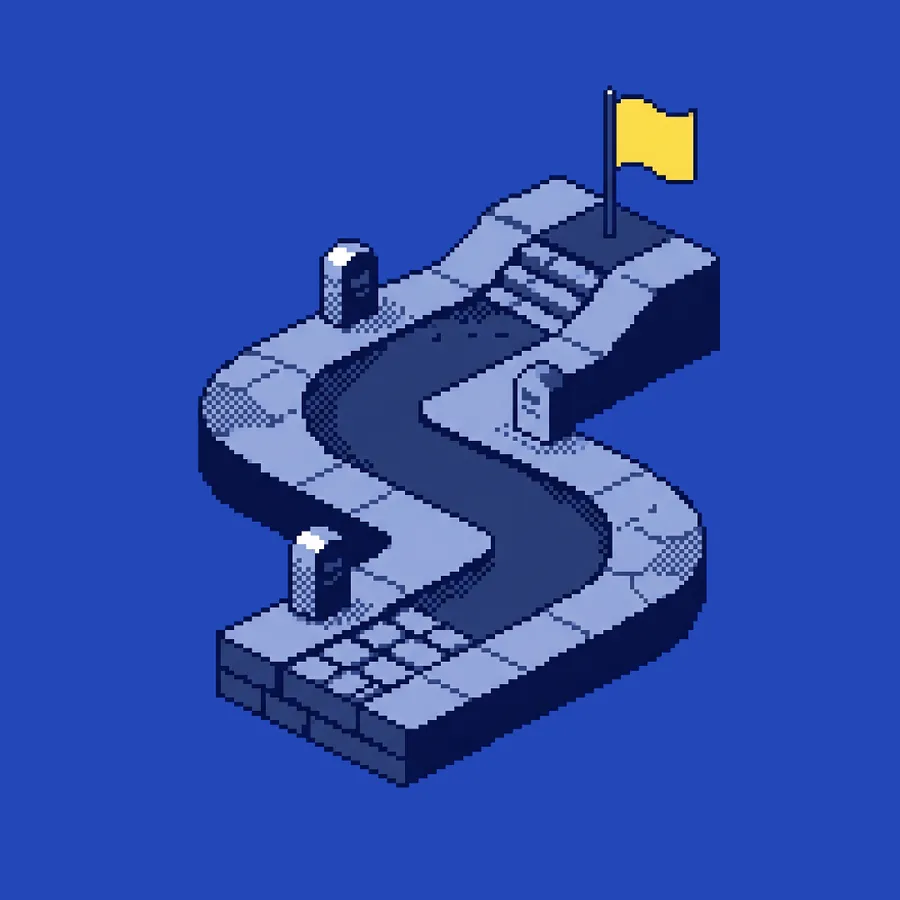
- Rolling out everything at once is why it fizzles.
- Go in order: quick wins, redesign, then build.
- Week one, win something small and visible.
- By day 90 you've got a system, not subscriptions.
You've probably tried AI three or four times already. ChatGPT for a campaign. Midjourney for a social batch. An AI scheduler. A "newsletter agent." Each one does something useful for a week, then everybody drifts back to the old way of working.
Ever notice how that keeps happening? It's usually the order you went in. You tried to do everything at once, content and social and images and audio and analytics, and your team couldn't absorb that much change in one go. Within 60 days the experiments fade and the subscriptions keep billing.
The teams that get AI to stick do it in order. First month, earn trust. Second month, redesign how the work flows. Third month, build the one system that holds it all together. By day 90 they've got something that runs.
The 90-day shape
Why most AI integrations fizzle
Three things trip teams up over and over:
- You start with the hardest thing. "Let's automate our whole blog." Day one. The team isn't ready, the tools aren't tuned, the brand voice wanders off, everybody rejects the output, and you all give up.
- You mistake a pile of tools for a system. Five AI subscriptions don't add up to a system. They add up to five apps that don't talk to each other and a $1,200/month bill.
- Nobody owns it. When AI is everyone's job, it's no one's job. The first time something breaks, it sits broken, because it was never anyone's to fix.
The 90-day plan fixes all three.
Phase 1: Weeks 1–2: Quick wins
Phase one earns trust. Don't try to transform anything yet. Pick two things slowing your team down this week, solve them visibly with AI, and let everyone feel the difference.
Some things that make a clean week-one win:
- Meeting note summaries. Otter.ai or Fireflies plus a Claude/GPT formatter that turns raw transcripts into a clean list of action items. Saves 30+ minutes a meeting.
- First-draft email replies. A simple prompt template your team pastes into Gmail or Outlook AI that spits out an on-voice draft. Saves 10 minutes a reply.
- Channel digests. A weekly AI summary of your busiest Slack or Teams channel. People feel heard, and the channel feels manageable again.
- Image background removal and cleanup. Any AI image tool. Saves design time.
These are small on purpose. They show your team that AI is a calm tool that does one specific job, not some force that's about to replace anyone. It takes the busywork off their plate so their hours go to the work that actually needs a human.
By the end of week two, your team should be able to point at two things they now do faster. That's the only number that matters this phase.
Phase 2: Weeks 3–8: Workflow redesign
Now you can do the real work. Pick three of your team's recurring marketing workflows and rebuild each one with AI in from the start:
- The one that eats the most time
- The one where quality is all over the place
- The one that cranks out the most volume
For most marketing teams that's content production, social posting, and email or newsletter. Sometimes it's video, podcast, or campaign briefs.
Rebuild each workflow as five steps:
- Input. What kicks this off? A brief, a calendar slot, a product launch.
- Generation. Which AI does the heavy lifting? Match the model to the job (more on that in Claude vs ChatGPT vs Gemini: Which AI for Which Marketing Job).
- Voice anchoring. How does the output stay on-brand? Reference docs, edit loops, drift detection.
- Quality gate. Who or what reads it before it ships?
- Distribution. How does it go out? By hand, scheduled, automated?
Write each one down. Name an owner. Set how much it should produce a week. These three become phase three.
By the end of week eight, you'll have three workflows redesigned and running. Two of them probably feel rough. Totally normal.
Phase 3: Weeks 9–12: Pipeline build
Phase three connects your three redesigned workflows into one system you run together, instead of three separate things you juggle.
Four pieces:
1. Route each job to the right model
You stop thinking "we use ChatGPT" and start thinking "we send each job to the model that fits it best." Long-form drafts go to Claude. Structured stuff (briefs, summaries, JSON) goes to GPT. Analysis with a lot of context goes to Gemini. Images go to Nano Banana, Midjourney, or Imagen. Voice and audio go to ElevenLabs.
Stop making one model do every job.
2. Voice anchoring
A brand voice doc the AI can actually read. A loop where your team's edits teach the system what "on-brand" means. Drift detection so you catch it the moment the output starts sounding like everyone else's. (Full four-step voice setup in Why Your AI-Generated Content Sounds Generic.)
3. Quality gates
Confidence scoring on drafts. A human set of eyes at the spots where things tend to go sideways. A backup plan for when the AI hands you something off-voice or flat wrong.
4. Know what's going on
You should be able to answer in 30 seconds: how many pieces shipped this week, how good each one was, what's lined up for next week. If you can't, you don't really have a system yet.
By the end of week twelve, you've got a written-down, owned AI system you can explain to anyone and ship through every week without scrambling.
Who does what
Name three people on day one:
- The driver. Usually your marketing director or operations lead. Owns the timeline, clears roadblocks, and has the say to cancel subscriptions that aren't earning their keep.
- The builder. The person actually building the workflows. Could be a content lead, a designer, a marketing ops manager. Someone with real time carved out for this.
- The backer. The exec who holds the budget and answers "was this worth it?" at the end. Doesn't run the day-to-day, just unblocks the big calls.
Skip these three and the 90 days drifts. Name them and it ships.
What day 90 looks like
A system that:
- Produces a steady amount of work your team controls, not the AI
- Sounds like your brand
- Has named owners and weekly numbers
- Costs less than the messy tool pile it replaced
- Fits on one diagram
You end up with something specific you can point at and run.
FAQ
-
How much should this cost in tools?
By day 90 your tool spend should be lower than it was, usually $300–$800/month for a small marketing team running a real system, versus $800–$1,500/month for a scattered pile of tools that does the same thing. The savings come from bringing it all together, not from cutting corners. For the full audit, see The Real Cost of Your AI Tool Stack.
-
What if we're only one or two people?
The 90 days still work. Your driver and builder are just the same person. Your backer is whoever pays the team. Skip nothing. The order matters more than the headcount.
-
Can we go faster than 90 days?
You can squeeze it to 60 if your team is small and disciplined. Faster than that usually snaps at phase two. Your team needs time to get used to the new workflows before you wire them into one system.
-
Do we need to hire anyone?
Usually not. The whole idea is to build this thinking into the team you already have. After day 90 you'll know whether you need a specialist or an outside hand.
-
What happens at day 91?
The system stops being a project and just becomes how you ship. Your driver's job turns into upkeep. Adding more (new workflows, deeper automation) becomes a clear next round, instead of a chaotic year-one blur.
If this clicks for you, start by handing your AI the context of your business so the work builds on itself. Give Your AI a Brain walks you through it in an afternoon. Want to know where you stand first? Take the free check.